What would you do if your business and records were damaged by a wildfire?
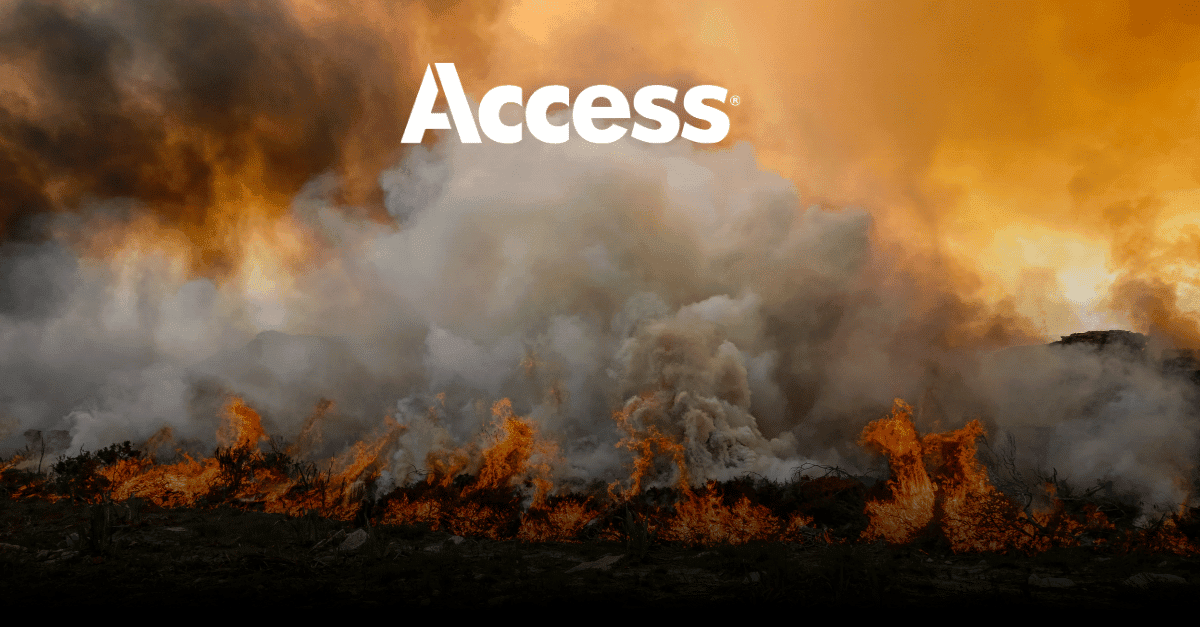
If you believe it couldn’t happen to you, think again. In 2024, seven of the 10 U.S. geographic areas experienced both more wildfires and more acres burned than normal, according to the National Interagency Fire Center. That was no fluke—it was actually part of a long-term trend. Analysis of data from NASA satellites has found that extreme wildfires have become more frequent, more intense, and larger over the past 21 years.
Many companies have falsely assumed they’re outside the danger zone and aren’t prepared to deal with the damage and disruption a fire leaves behind. In this post, we’ll walk you through how to rebuild and explain how records teams can reestablish governance, restore access, and fortify their information systems against future calamities.
A Fire’s Nasty Aftermath
For records managers, the days and weeks following a wildfire are challenging and stressful. You may not know for some time which records went up in flames and which were spared. Even those that escaped the fire may be damaged by smoke, which can leave stains and cause warping or brittleness, foul odors, and eventually, mold. Extreme heat can also warp microfilm and magnetic tapes.
But it’s not just fire that harms records—the sprinkler systems or hoses used to suppress it can cause water damage. Firefighting foam can also cause water damage or react with paper and ink, causing them to degrade.
The damage could worsen before you’re allowed back into the building, which could take days or longer due to air quality concerns. In the meantime, the building’s power supply may be shut down, disrupting servers and hampering remote access. If the fire is widespread, roads may be blocked, preventing access to clean-up vendors and insurance agents—who will be further delayed by the high volume of service calls and claims.
A Roadmap for Records Recovery
Once you return to the office, you can take clearly-defined steps to conquer the chaos. Though you can’t undo the destruction, following these procedures will set you on the road to recovery and help you strengthen your defenses for the future.
Illuminating the Path to Information Clarity: Reflections from 2025
In Illuminating the Path to Information Clarity: Reflections from 2025, we’ll revisit the pivotal moments, insights, and innovations that shaped the year and explore what’s on the horizon for records and information management professionals in 2026.
Step 1: Conduct a Rapid Inventory
Make a list of items that are missing, damaged, or displaced. Then make a separate list of those that are critical to business operations or subject to compliance regulations. For your most valuable damaged files, consider contacting a restoration specialist. These companies use techniques like freeze drying, smoke and soot remediation, and deodorization to save documents that may seem unsalvageable at first glance.
As you restore your most important surviving records, consider digitizing them—and doing the same with the rest of your records going forward.
Step 2: Establish a Chain of Custody
Track records that were relocated before or after the fire to temporary office space, off-site storage, or remote teams. Confirm that all regulatory and privacy standards were upheld during this time.
Step 3: Evaluate Digital Access
After assessing the physical damage, take a step back and evaluate your company’s digital performance during the crisis. Did your data backups work successfully? Could staff obtain the information they needed? How well did your VPN and other remote access technologies work? Were your security and access policies maintained at all times?
Step 4: Evaluate Your Storage Options
As you may have learned, “fireproof” cabinets can’t protect their contents from other fire-related damage, including water, mold, and mildew. Documents in filing cabinets may also be damaged by smoke—and in extreme temperatures, they may even ignite. Consider obtaining offsite storage outside your local area.
Step 5: Evaluate Your Vendors
How did your vendors hold up during the crisis—were they able to meet their contract obligations? If not, your vendor network may be too centralized. Make a list of alternate providers that meet your requirements and find out if they can step in during a regional disaster.
Step 6: Review Your Information Governance
The disruption of a wildfire puts your information governance capabilities to the test—and in some ways, that’s a blessing in disguise. You can finally obtain factual answers to tough questions, revealing your weak points and pointing you to solutions that strengthen them. Here are some key questions you should ask:
- Are your governance controls reactive or strategic? Were retention policies and compliance updates implemented during the crisis? If not, where did enforcement break down? When that happened, did your backup system alert the right people?
- How quickly were you able to prove compliance after the fire? Do employees understand that moving records, even for a short period of time, requires documentation?
- Did employees know where to find the information they needed? Could they access it securely, yet quickly enough? Document instances where workers were improperly denied access or encountered processes that were unbearably slow. Your IT team can look at fixes, investigate alternative technologies, or consider different vendors.
Don’t Just Recover—Build Back Stronger
A wildfire event exposes weak links. As a result, it lights the way to improvements that will make your data protections and governance stronger, and it serves as a catalyst to improve access to information during future disruptions.
At a time when the scope and ferocity of wildfires is growing, protecting your records is no longer optional, it’s a core business responsibility. Now is the time to fortify your approach. Read about how to prepare ahead of a disaster, and learn from the business continuity plans we follow before, during and after a wildfire.
If you want to learn more, we’ve developed this centralized hub for actionable resources, expert guidance, and strategic tools to help your organization effectively prepare for, respond to, and recover from all types of disruptions, including wildfire events. Check it out!
Disaster Preparedness Resources







Share